Living & Real Estate
South Charlotte Flood Insurance Guide: Flood Zones and the NFIP
Most homeowners policies don't cover floods. Here's how to check a South Charlotte home's flood zone, what NFIP coverage includes, and the discounts and programs available locally.
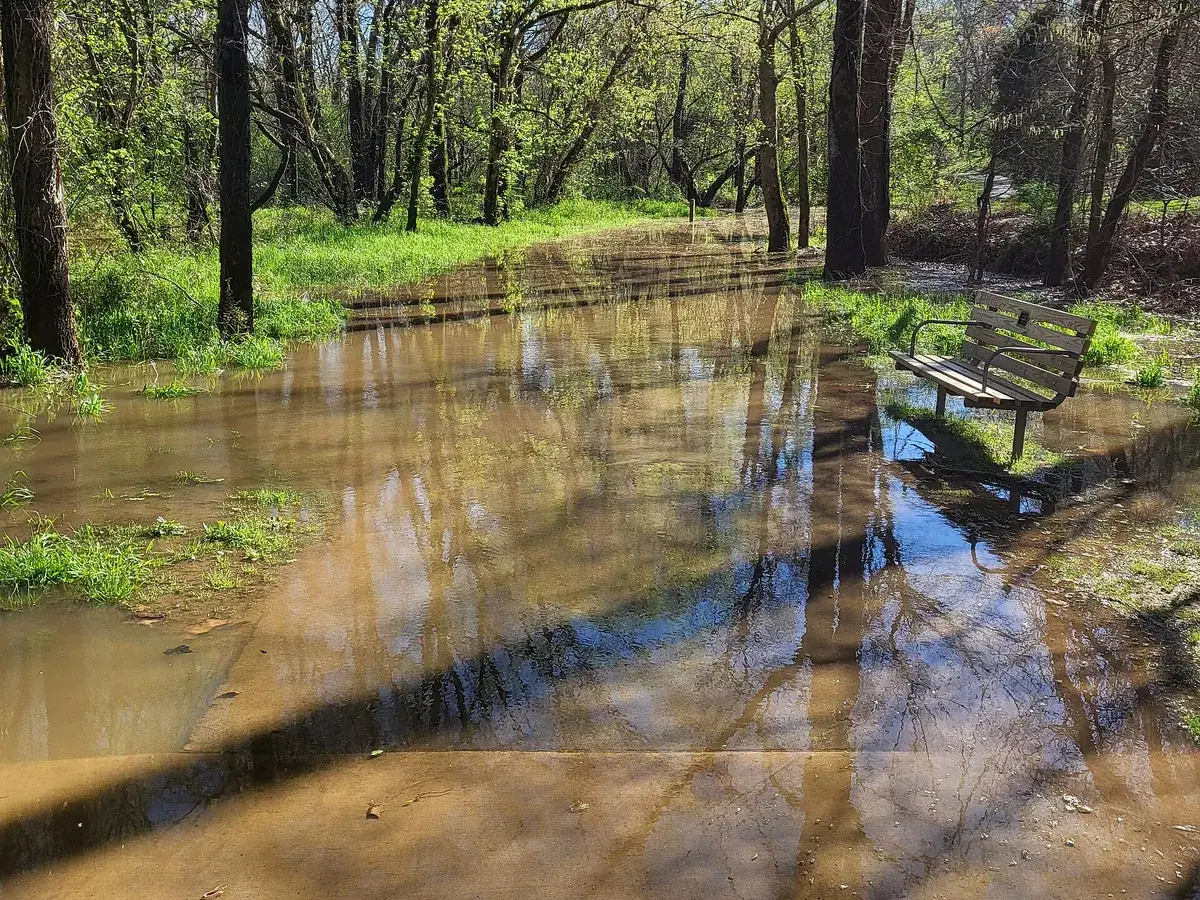
Photo: City Dweller 2, CC BY-SA 4.0, via Wikimedia Commons
Most South Charlotte homeowners never think about flood insurance until a lender asks for it or a summer storm turns a backyard creek into a river. This guide explains how flood zones work in Mecklenburg, Union and Lancaster counties, what a National Flood Insurance Program (NFIP) policy does and doesn't cover, how Charlotte's Community Rating System discount works, and the local programs that help floodplain homeowners.
This is general information, not insurance or legal advice. Rates and requirements depend on the specific property, so confirm the details with a licensed insurance agent and your local floodplain office.
The short version
- Standard homeowners and renters policies usually don't cover flooding. FloodSmart, the NFIP's official site, says flood damage needs a separate flood policy.
- New NFIP policies generally take 30 days to go into effect, so you can't wait until a storm is in the forecast.
- Some mortgages require flood insurance. If a home is in a Special Flood Hazard Area and has a government-backed mortgage, flood insurance is required, according to FloodSmart's eligibility page.
- Flooding happens outside mapped floodplains too. The City of Charlotte says 28% of flood insurance claims each year come from outside high-risk areas.
- Charlotte policyholders get a discount. The City of Charlotte became a FEMA Community Rating System Class 2 community on April 1, 2025, the top rating in North Carolina.
Why flooding matters here
South Charlotte is laced with creeks: Little Sugar, McAlpine, McMullen, Four Mile and Six Mile in Mecklenburg County, and Twelve Mile along the Union County and South Carolina line. Most of the time they are quiet greenway scenery. In heavy rain they can rise quickly.
Mecklenburg County's Storm Water Services calls flooding the county's number one weather-related risk. According to the City of Charlotte's floodplain page:
- Almost 20,000 acres of land across Mecklenburg County are designated as regulatory floodplain.
- More than 20,000 parcels touch the regulated floodplain, representing 5.8% of the land in the county.
- Building in local floodplains has been restricted since the late 1970s, but many older homes and businesses were built in them before that.
Two kinds of floodplain on Mecklenburg maps
Charlotte-Mecklenburg maps flood risk a little differently from most places. In 2000 it became the first community in the nation to show both current and future floodplains on its official maps, the city says.
- FEMA Floodplain: where flooding is likely to occur now. This is the line that matters most for flood insurance rating and lender requirements.
- Community Floodplain: where flooding is likely to occur in the future, based on expected development upstream. Local development rules apply to both.
Floodplain maps are updated over time. The city says Mecklenburg's remapping was split into four phases: Phase 1 maps took effect in 2014, Phase 2 in 2015 and Phase 3 in 2018, and Phase 4 maps are in development. Floodplains along the Catawba River, Lake Norman, Mountain Island Lake and Lake Wylie are also being remapped, which matters for Steele Creek and other lakeside neighborhoods.
How to check a property's flood zone
Mecklenburg County (Charlotte, Matthews, Pineville and the rest of the county): Type the address into the county's 3D Floodzone map, which shows FEMA and Community floodplains and is designed to show a property's flood risk and ways to reduce it. The city also lists a floodzone phone line, 704-432-RAIN. The latest rainfall totals and stream levels are on the county's Flood Information and Notification System (FINS).
Union County (Waxhaw, Weddington, Marvin and nearby): Union County's flood maps page points residents to flood.NC.gov, where you can enter an address to see the flood zone and risk level, and to the state's more technical Flood Risk Information System (FRIS). For questions about building in a floodplain, the county says to contact your town if the property is inside a municipality, or Union County Planning at 704-283-3557 for unincorporated areas.
Lancaster County, SC (Indian Land): Lancaster County participates in the NFIP, which makes flood insurance available to all county residents. The SC Department of Natural Resources says South Carolina's flood maps can be viewed by address on FEMA's Map Service Center (msc.fema.gov) or the state's floodplain map viewer at scfloodimpact.com.
What an NFIP policy covers
According to FloodSmart:
- Building coverage goes up to $250,000 for a home and covers the structure and its systems, such as electrical and plumbing, furnaces and water heaters, built-in appliances, permanently installed carpeting and cabinets, foundation walls and staircases, and detached garages.
- Contents coverage goes up to $100,000 for belongings such as clothing, furniture, electronics, curtains, and a washer and dryer. Renters can buy contents coverage on its own.
- Building and contents coverage are typically purchased separately and have separate deductibles.
- NFIP rates don't vary by insurance company. The NFIP partners with more than 48 insurance companies and thousands of agents who all use the same pricing. Policies from private, non-NFIP insurers can cost more or less.
What it doesn't cover
FloodSmart lists items an NFIP policy doesn't cover no matter the cause of flooding, including:
- Personal property kept in basements
- Property outside the insured building, such as landscaping, septic systems, decks and patios, fences and swimming pools
- Cars and most self-propelled vehicles
- Temporary housing and living expenses while your home is repaired
- Currency, precious metals and valuable papers
The cause of the water also matters. FloodSmart's example: a sewer that backs up during a heavy rainstorm is covered, but a backup caused by clogged pipes is not.
How flood insurance is priced now
FEMA's current pricing approach, known as Risk Rating 2.0, was fully in place as of April 1, 2023. Instead of leaning mainly on a home's flood zone and elevation, it considers more variables, including how often flooding happens, flood types such as river overflow and heavy rainfall, distance to water, the building's elevation and the cost to rebuild.
A few points from FEMA that are useful for buyers and sellers:
- Flood maps still decide who is required to buy flood insurance, and they still guide local building rules.
- Statutory limits mean most NFIP rates can't rise more than 18% a year.
- A seller can transfer an existing discounted policy to a buyer by assigning the policy when the property changes hands.
Charlotte's Community Rating System discount
The Community Rating System (CRS) is a voluntary FEMA program that rewards communities whose floodplain management goes beyond NFIP minimums. Classes run from 10 (no discount) to 1 (45% off), in 5% steps, according to FEMA's CRS page.
Mecklenburg County announced that the City of Charlotte became a Class 2 community effective April 1, 2025, putting it in the top 1% of participating communities nationwide and making it the top-rated community in North Carolina. The county estimated the rating would save residents $1 million or more a year in flood insurance premiums. Storm Water Services describes the discount as up to 40% for buildings in the FEMA-regulated floodplain and 10% outside it.
How the discount shows up on a bill can vary. FEMA says that under its current pricing approach, the CRS discount is applied uniformly to policies throughout a participating community, whether or not the building is in the high-risk zone. A policy can be excluded from the CRS discount if the building doesn't comply with local floodplain regulations. Ask your agent how the discount appears on your declarations page.
The Class 2 rating applies to the City of Charlotte. Towns and counties have their own NFIP and CRS status, so if you live in Matthews, Pineville, Union County or Lancaster County, ask your agent which discount, if any, applies to your address.
If you're buying a home near a creek
- Check the flood zone before you make an offer, using the maps above.
- Read the seller disclosure. The City of Charlotte notes that North Carolina's Residential Property Disclosure Statement asks the seller whether the property is a flood hazard or in a federally designated floodplain, and asks about standing water, dampness and drainage. Verify what the seller tells you.
- Get a flood insurance quote early, even if the lender doesn't require one. Remember the 30-day waiting period on new NFIP policies.
- Ask whether the seller has a policy that can be assigned to you.
- Know that renovations can trigger floodplain rules. In Charlotte-Mecklenburg, a Floodplain Development Permit has been required since 1994 for development in the floodplain. The city says an individual permit is generally required for grading, filling, new construction, and renovations worth more than $10,000 if the structure doesn't already meet floodplain regulations. New buildings in a FEMA-regulated floodplain need an Elevation Certificate before they can be occupied.
Local help for floodplain homeowners
Charlotte-Mecklenburg Storm Water Services runs two voluntary programs for homes in the regulated floodplain:
- Floodplain Buyout Program. More than 490 homes have been purchased since 1999, and more than 785 families and businesses have relocated outside the floodplain, according to the program page. The county stresses that buyouts are voluntary and owners are not forced to sell. Properties are prioritized by flood risk and cost-effectiveness.
- RetroFIT Floodproofing Program. RetroFIT offers technical help and reimbursement for up to 99% of eligible expenses for qualified floodproofing projects, such as elevating a home, for property owners in the FEMA floodplain. As of June 2026, a homeowner can name a designee to manage the project or provide up-front funding.
Don't count on disaster aid
FloodSmart notes that federal disaster assistance is only available when the president declares a disaster, and most flood events don't get a declaration. When aid is available, it often comes as loans that must be repaid. If a property has received federal disaster assistance before, flood insurance is required to qualify for future aid, and that requirement stays with the property even after it's sold.
For more on choosing where to live in the area, see our Moving to South Charlotte guide. Many of the creeks mentioned here are also lined with trails; our South Charlotte greenways guide covers them.
Frequently asked questions
Does homeowners insurance cover flooding in Charlotte?
Usually not. FloodSmart, the official NFIP site, says most homeowners and renters policies don't cover flood damage. You need a separate flood insurance policy from the National Flood Insurance Program or a private flood insurer.
How long does it take for flood insurance to start?
New NFIP policies generally take 30 days to go into effect, according to FloodSmart. That's why it's best to buy coverage well before storm season rather than when heavy rain is in the forecast.
How do I find out if my South Charlotte home is in a flood zone?
In Mecklenburg County, enter the address in the county's 3D Floodzone map. In Union County, the county points residents to flood.NC.gov and the state's FRIS map. In Lancaster County, SC, use FEMA's Map Service Center or the state viewer at scfloodimpact.com.
Do I need flood insurance if I'm not in a floodplain?
It isn't required by federal rules unless you're in a Special Flood Hazard Area with a government-backed mortgage, though some lenders require it anyway. The City of Charlotte says 28% of flood insurance claims each year come from outside high-risk areas, so it's worth considering.
What is Charlotte's flood insurance discount?
The City of Charlotte is a FEMA Community Rating System Class 2 community as of April 1, 2025. Storm Water Services describes a discount of up to 40% on NFIP premiums for buildings in the regulated floodplain and 10% outside it. Ask your agent how it applies to your policy.
How much flood insurance coverage can I get through the NFIP?
FloodSmart says NFIP building coverage for a home goes up to $250,000 and contents coverage up to $100,000. Building and contents are typically bought separately, with separate deductibles. Renters can buy contents coverage alone.
Sources
- FloodSmart (NFIP): Buy a flood insurance policy / what's covered
- FloodSmart (NFIP): Who's eligible for NFIP flood insurance?
- FEMA: NFIP's Pricing Approach (Risk Rating 2.0)
- FEMA: Community Rating System
- Mecklenburg County: New Rating Equals Flood Insurance Discounts for Residents (Apr. 2, 2025)
- Charlotte-Mecklenburg Storm Water Services: Community Rating System
- Charlotte-Mecklenburg Storm Water Services: Flood Safety Resources
- Charlotte-Mecklenburg Storm Water Services: Floodplain Buyout Program
- Charlotte-Mecklenburg Storm Water Services: RetroFIT Floodproofing Program
- City of Charlotte: Flooding and Maps
- Mecklenburg County: 3D Floodzone map
- Mecklenburg County: Flood Information and Notification System (FINS)
- Union County: Flood Maps
- North Carolina Flood Risk Information System (FRIS)
- Lancaster County, SC: Floodplain Management
- SC Department of Natural Resources: Flood Maps